Swear your wedding vows upon an oathing stone

Swear your wedding vows upon an oathing stone

The Scottish tradition of swearing upon an oathing stone, or oath stone, is intended to tie the new family to the land while their ancestors bear witness to their promises. It’s not a common wedding practice in the United States, but it’s one that brings heft into the ceremony.

Is an oathing stone right for your wedding?
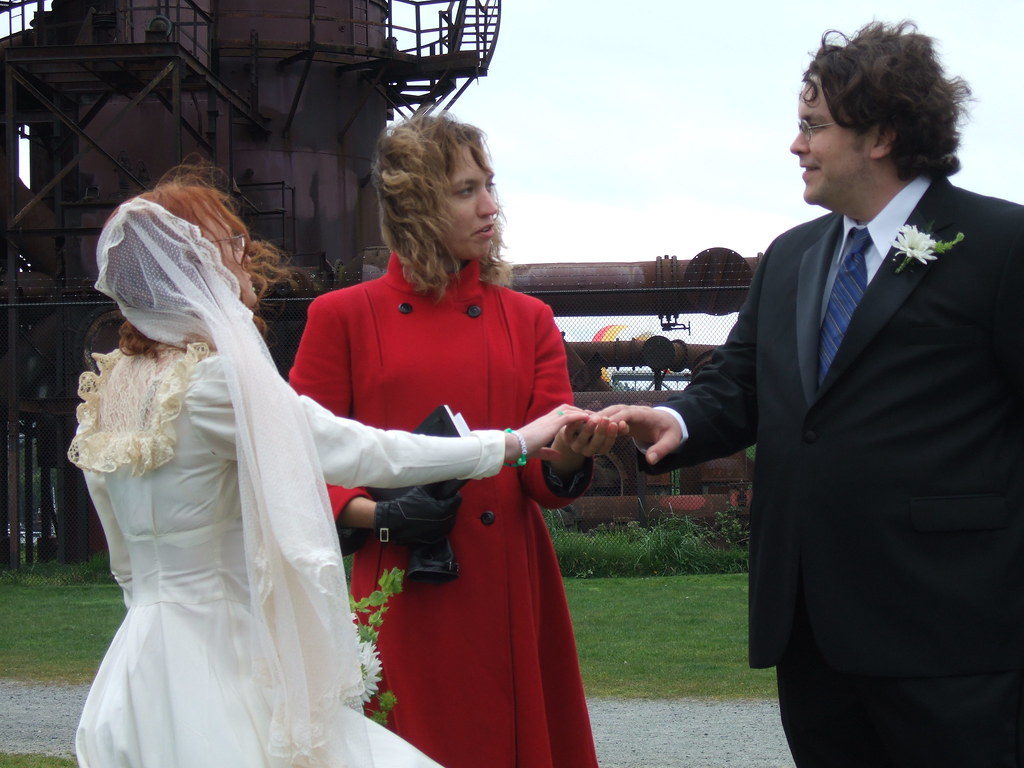
This Scottish practice isn’t from a closed tradition, but it’s always appropriate to acknowledge the source of an act to avoid the potential for cultural appropriation. That said, the Scots have created something that is visceral in a way that simply exchanging promises with one another might not be. Using an oathing stone might make sense under certain circumstances, such as:

  • at least one of the families has been living on the same parcel of land for multiple generations,
  • those being wed expect to continue living in the same location for the foreseeable future,
  • there is a desire to express that land stewardship or conservation is an important value,
  • animism is, or informs, your personal belief systems, and you want to include your non-human neighbors, or
  • involving a weighty stone makes it easier to appreciate the weight of the promises being made.

Choosing an oath stone
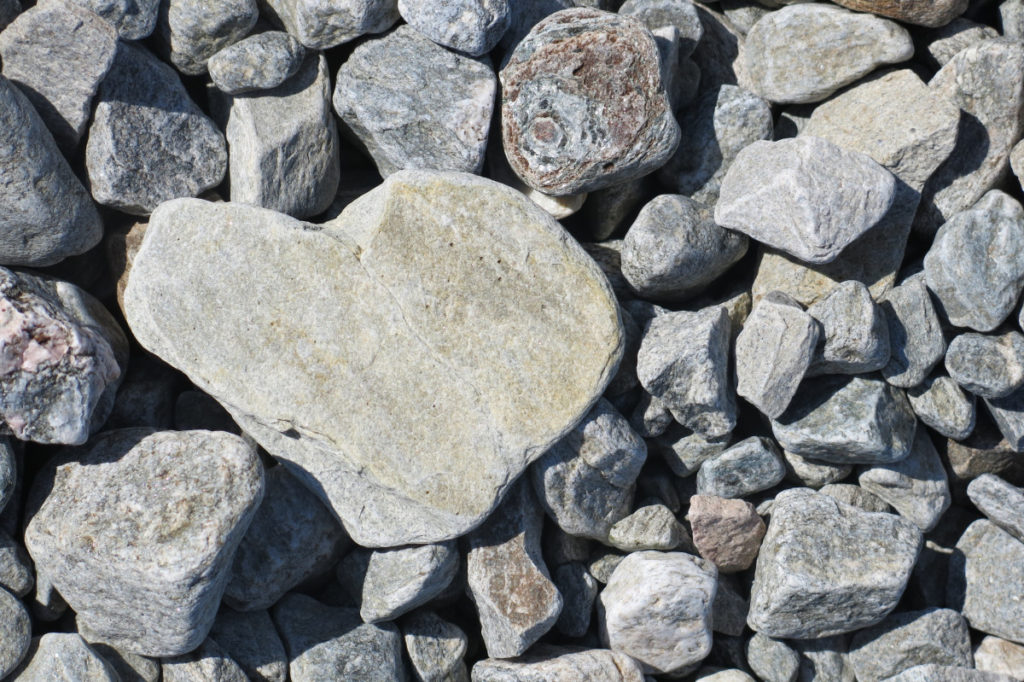
It can resonate quite deeply when the stone selected is from a place that holds particular significance, but that can also lead to overthinking. If you have a stone in mind, use it! Alternatively, there is no reason why a couple can’t simply take a walk outside and pick up stone that just feels right. Take a walk together in a natural place that’s special to you, be it woodland or shoreline, field or stream. Rather than focusing on all the little details around you, try to look into the middle distance and absorb the sounds, smells, and other sensory information as a whole. Eventually, something will draw your attention to look in a specific place for your stone. Please remember, though, that removing natural objects from national and state parks is usually illegal.

However, any stone can be the central piece of this ceremony, though, including one personally or professionally decorated for the event.

Oathing stones are carried by a trusted wedding attendant until needed, and are charged during the exchange of vows. It is held in the hands of those making the vows while those promises are repeated, making it also suitable for larger ceremonies.

According to tradition, the vows are made all the stronger by sealing them in the stone. It can then be set in a place of honor, whether that’s at the base of a special tree, on the mantle, or displayed in a cabinet or on a shelf made for that purpose. If you like, you can continue to work with the stone, for example by holding it again on your anniversary and reaffirming your pledges, or by giving it a drink of good whisky or another beverage of your choice from time to time. Another tradition is to toss it into a body of water, giving your promises to the earth itself.

How you adapt this practice for your wedding is best worked out between you and your officiant. No matter how it’s done, sealing your vows in stone is a powerful act.
Write your own vows with this rule of threes

Write your own vows with this rule of threes

Writing your own wedding vows is a very romantic idea, but it’s not for everyone. Some folks freeze up at the thought of writing anything creative at all, some get scared at the sight of a blank page or screen, and there are also those from whom words flow like water. Which kind are you?

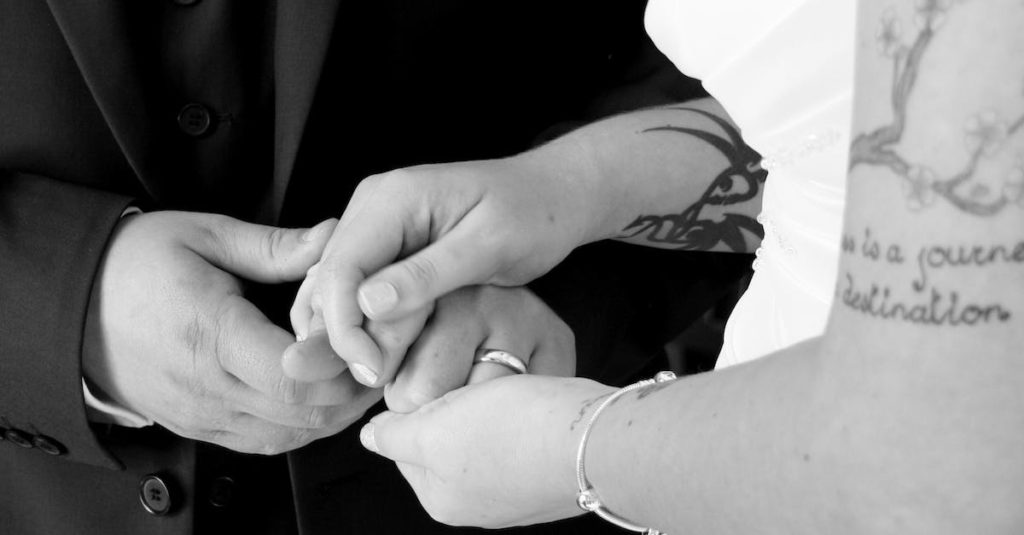
man in black suit holding womans hand
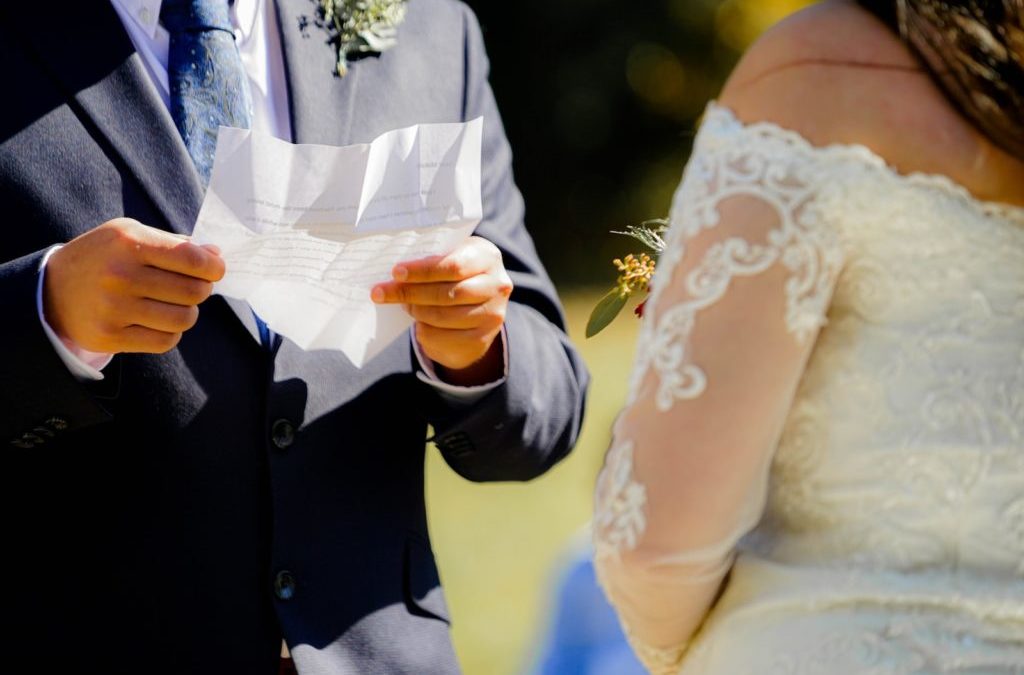
When you write your own vows, you can read them from your notes, or repeat after the officiant.

When the words are easy

Some people think more in words than anything else. If you’re that sort, then you might not need anything more than some time to think about your future spouse to get the ideas flowing. For you, letting it all out is exactly what you want to do first, but remember that everyone needs an editor. Human brains tend to filter out anything that is familiar, like the words you yourself wrote; that makes it hard to spot your own misteaks. It’s just our wiring. You’ll also want to try reading aloud whatever you come up with in front of a friend. Sometimes the words we choose as we write don’t sound as good as they look, and might take some tweaking to nail down the sentiment. You also want to know about how long it takes to read aloud; if you are going to repeat after your officiant, double that time. Ideally, both sets of vows should take roughly the same amount of time.

When you can’t find the right words

Words don’t come as easily to everyone, and that’s okay. All of our brains work differently, and yours might be more focused on colors, or emotions, or sensations, or music. You might need a little bit of prompting to find words that match how you feel about someone you’re about to commit to in a big and amazing way. Try breaking it down into smaller pieces with this rule of threes. Block out some time, by yourself or with someone close to you like a parent or friend that you would want in your wedding party, and jot down the following:

  • three things you love about your partner
  • three dreams to share
  • three promises to make

Once you have three of each (or two, or four; don’t sweat the numbers too much; when you’re done, you’re done), just write ’em up: “Robin, I love that when we met you were wearing my favorite shade of green, I love the sound of your laugh, and I love that you’ve never been to Muskogee. I want to raise puppies with you, and get season tickets to the Panthers together, and live in a purple house together. I promise that I will never criticize your driving, that I will not water the plants because I always kill them, and that you will be happier married to me than you ever have been before.”

You can also mix it up: “I love the sound of your laugh, I want to live in a purple house together, and promise not to water the plants.” Once you have the base material, it’s just about rearranging it—but skip that part if you are the sort to overthink it. If you’re grinding your teeth, you’re done, okay?

When writing is always stressful

For some of us, writing and reading are a major headache. If you get massive anxiety at the idea of writing vows, you might want to focus your creativity on other wedding planning and give this part a pass. There are a lot of lovely wedding vows out there on the internet that you can choose to use instead. It will be lovely either way.

On the other hand, if you don’t like to write but you really, really want your wedding vows to be in your words, talk to me! I’ve been interviewing people since I was 13 years old, and turning what they tell me into a written words. Talking uses a different part of the brain than writing, and I can help you find words to match how you feel. Helping you tell your own story is what I’m here to do.

When you don’t want to write your own vows

When you don’t want to write your own vows

I create custom wedding ceremonies, but not everyone wants to use custom wedding vows. That’s perfectly okay! A familiar set of words can anchor a ceremony, which can be especially important if you want nontraditional elements in your ceremony, as well.

Writing your own vows can be very romantic, but for some people that extra task is going to be the one that tips you over into event-planning anxiety. Choose any of the below scripts, and we can use it whole cloth or tweak whatever wording you’d like.

Here are some examples of vows, adapted from the eminent folks at Unboring Weddings, that you can read to each other, or repeat after me. No writing or memorization is required.

More traditional

I, __________
do take you, __________ ;
to be my wedded spouse,
in the holy estate of marriage,
to have and to hold
from this day forward,
for better for worse,
for richer for poorer,
in sickness and in health,
I will love you and cherish you,
all the days of my life,
in the presence of the divine and these loved ones,
I give you this promise.

Join my life with yours

I, __________, take you, __________,
to be my spouse,
my partner, and friend.
To join my life with yours,
to share with you all that is to be, to laugh with you in joy,
to comfort you in sorrow,
to grow with you in love.
I will honor you
and be faithful to you,
all the days of my life.
This is my vow.

You are my choice

Today, I choose you
to be my spouse.
I vow to love you,
encourage you,
trust you, and respect you.
I accept you as you are,
and I offer myself in return.
I will care for you,
and stand beside you.
I will share with you all of life’s adversities,
and all of its joys,
from this day forward,
and all the days of my life.

From Jewish tradition

Today I ask
that you be a companion
and a spouse to me
with your consent and with your full knowledge.
May this marriage be a covenant
of partnership and trust
as we work to build a life together:
sometimes in unison, sometimes in harmony.
Today I bind myself to you
with respect, with love,
with friendship and with joy,
so that we may be companions and lovers
until the end of our days.

Spiritual, not religious

I, __________, take you, __________,
to be my spouse.
I promise to choose you every day,
to love you in word and deed,
to do the hard work
of making now into always.
To laugh with you and cry with you,
to grow with you, and create with you.
To honor the divinity in you,
of you, and around you.
To be your kin and your partner
in all of life’s adventures.
Loving what I know of you
and trusting what I don’t yet know,
I give you my hand.
I give you my love.
I give you myself.

What you are to me

You are my lover and my teacher,
you are my model and my partner,
and you are my true counterpart.
I will love you,
hold you and honor you.
I will respect you,
encourage you and cherish you,
in health and sickness,
through sorrow and success,
for all the days of my life.