
The Scottish tradition of swearing upon an oathing stone, or oath stone, is intended to tie the new family to the land while their ancestors bear witness to their promises. It’s not a common wedding practice in the United States, but it’s one that brings heft into the ceremony.
Is an oathing stone right for your wedding?
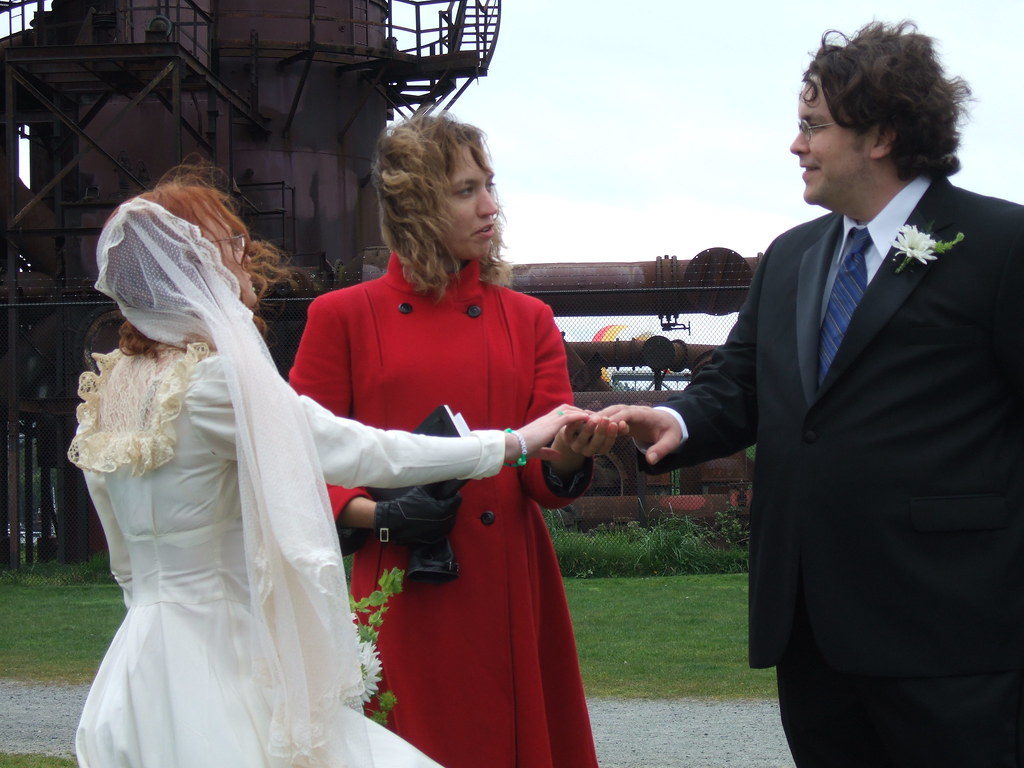
This Scottish practice isn’t from a closed tradition, but it’s always appropriate to acknowledge the source of an act to avoid the potential for cultural appropriation. That said, the Scots have created something that is visceral in a way that simply exchanging promises with one another might not be. Using an oathing stone might make sense under certain circumstances, such as:
- at least one of the families has been living on the same parcel of land for multiple generations,
- those being wed expect to continue living in the same location for the foreseeable future,
- there is a desire to express that land stewardship or conservation is an important value,
- animism is, or informs, your personal belief systems, and you want to include your non-human neighbors, or
- involving a weighty stone makes it easier to appreciate the weight of the promises being made.
Choosing an oath stone
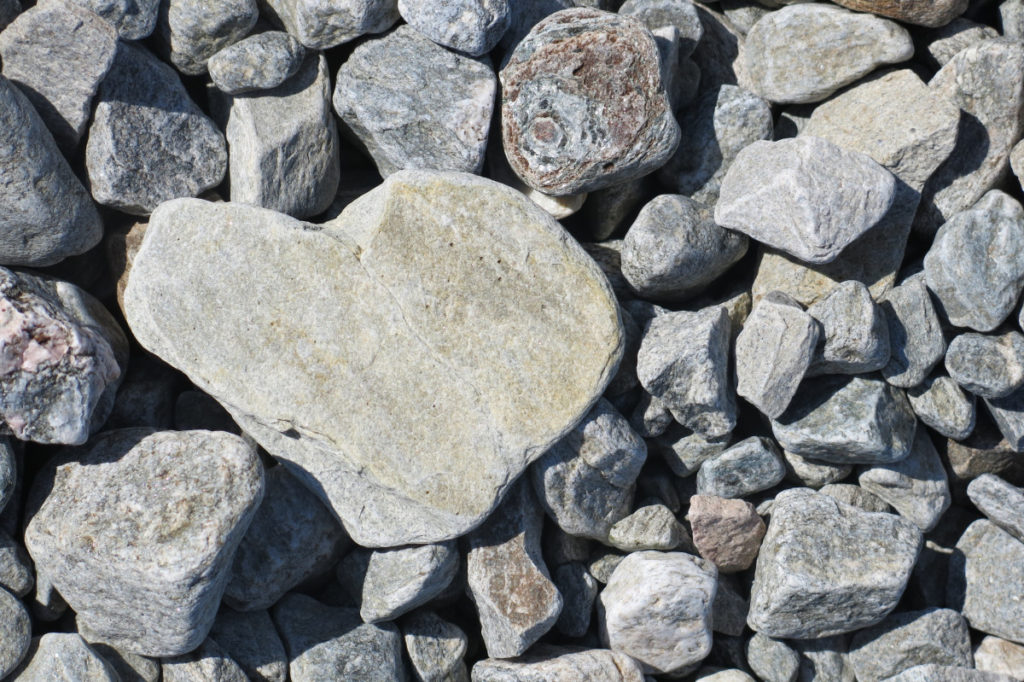
It can resonate quite deeply when the stone selected is from a place that holds particular significance, but that can also lead to overthinking. If you have a stone in mind, use it! Alternatively, there is no reason why a couple can’t simply take a walk outside and pick up stone that just feels right. Take a walk together in a natural place that’s special to you, be it woodland or shoreline, field or stream. Rather than focusing on all the little details around you, try to look into the middle distance and absorb the sounds, smells, and other sensory information as a whole. Eventually, something will draw your attention to look in a specific place for your stone. Please remember, though, that removing natural objects from national and state parks is usually illegal.
However, any stone can be the central piece of this ceremony, though, including one personally or professionally decorated for the event.
Oathing stones are carried by a trusted wedding attendant until needed, and are charged during the exchange of vows. It is held in the hands of those making the vows while those promises are repeated, making it also suitable for larger ceremonies.
According to tradition, the vows are made all the stronger by sealing them in the stone. It can then be set in a place of honor, whether that’s at the base of a special tree, on the mantle, or displayed in a cabinet or on a shelf made for that purpose. If you like, you can continue to work with the stone, for example by holding it again on your anniversary and reaffirming your pledges, or by giving it a drink of good whisky or another beverage of your choice from time to time. Another tradition is to toss it into a body of water, giving your promises to the earth itself.
How you adapt this practice for your wedding is best worked out between you and your officiant. No matter how it’s done, sealing your vows in stone is a powerful act.